
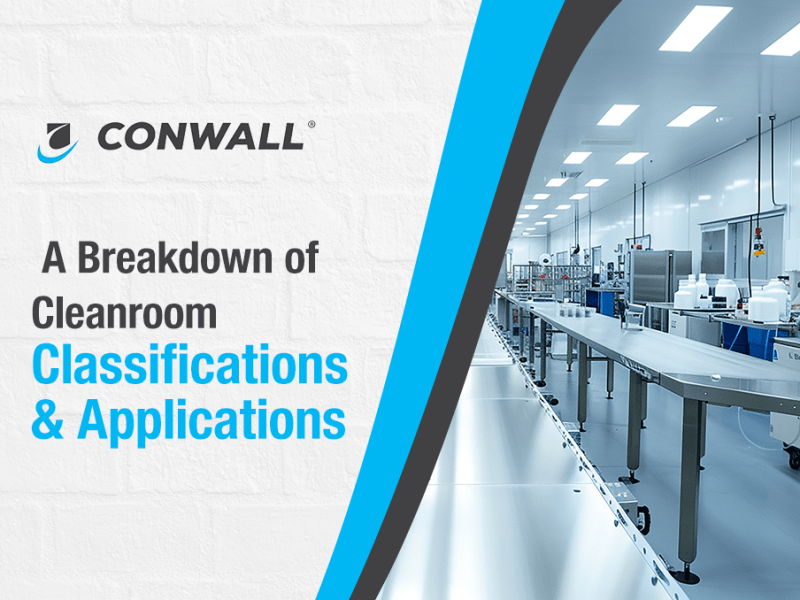
Walk into a standard office, and you are inhaling roughly 35 million particles per cubic meter of air. Most of it is skin cells, dust mites, and lint—harmless in a boardroom, but a catastrophic “meteor strike” in a semiconductor fab or a sterile pharmacy. This is why cleanrooms exist. They aren’t just “clean rooms”; they are highly engineered environments where air is scrubbed, pressurised, and disciplined to protect the future of technology and health.
In the high-stakes world of precision manufacturing, the difference between a successful product launch and a multi-million dollar recall often comes down to a few microns. For industries in the region looking for robust cleanroom solutions, understanding these invisible boundaries is the first step toward operational excellence. It isn’t just about filters; it’s about the physics of the invisible.
Whether you are looking at the delicate assembly of a medical device or the complex layers of a microchip, the ISO 14644-1 standard is your roadmap. It categorises environments based on how many particles of a specific size exist in a cubic meter of air. To the uninitiated, the jump from ISO 8 to ISO 5 might seem incremental, but in reality, it is the difference between a gentle breeze and a surgical-grade vacuum.
The ISO 14644-1 Hierarchy: By the Numbers
The following table breaks down the maximum allowable concentrations for the most common classifications. Note how rapidly the “allowance” for particles drops as the classification number decreases.
| ISO Class | ≥ 0.1 µm | ≥ 0.5 µm | ≥ 5.0 µm | Typical Industry Application |
| ISO 3 | 1,000 | 35 | – | Advanced Semiconductor Fabs |
| ISO 4 | 10,000 | 352 | – | Nanotechnology, High-end Optics |
| ISO 5 | 100,000 | 3,520 | – | Aseptic Pharma Filling, Surgery |
| ISO 6 | 1,000,000 | 35,200 | 293 | Biotechnology, Aerospace |
| ISO 7 | – | 352,000 | 2,930 | Medical Device Assembly |
| ISO 8 | – | 3,520,000 | 29,300 | Electronics, Food Packaging |
Source: ISO 14644-1 Particle Concentration Limits
When we talk about epc construction in Malaysia, these numbers dictate every decision from the HVAC tonnage to the type of epoxy used on the floors. A single hair is about 70 microns wide—massive compared to the 0.5-micron threshold that defines most high-spec environments.
ISO 1 to ISO 4: The Ultra-Precision Frontier
These are the cathedrals of science. At these levels, we are filtering out particles that are smaller than many viruses. You’ll find these environments in leading-edge semiconductor manufacturing. In Malaysia’s booming E&E sector, especially in Penang and Kulim, ISO 3 and 4 facilities are the backbones of the global supply chain.
Imagine a grain of dust landing on a 3nm transistor; it doesn’t just block a connection—it acts like a mountain range dropping onto a city. The air in these rooms typically changes 500 to 750 times per hour. That’s a total air refresh every few seconds.
ISO 5: The Aseptic Standard
ISO 5 (formerly known as Class 100) is the “gold standard” for the pharmaceutical world. This is where life-saving drugs are put into vials. The goal here isn’t just “no dust”; it’s “no life.” Any microbial contamination could turn a medicine into a hazard.
Construction at this level requires non-porous surfaces, coved corners (to prevent dust traps), and rigorous gowning protocols. When you see scientists in “bunny suits” looking through glass, they are likely in an ISO 5 zone.
ISO 7 and ISO 8: The Workhorses
Most industrial applications live here. From the assembly of medical stents to high-end food processing, ISO 7 and 8 provide a controlled environment that balances cost with necessary cleanliness. These rooms use non-unidirectional airflow, meaning the air is filtered but “mixed” before being exhausted.
For a growing enterprise, choosing between these two is a vital business decision. ISO 8 is significantly more affordable to maintain than ISO 7, but it offers less protection if your process involves open containers or sensitive optics.

The Physics of Airflow: Laminar vs. Turbulent
The classification isn’t just about the filter; it’s about how the air moves. In high-spec rooms (ISO 5 and cleaner), we use “Laminar” (unidirectional) airflow. Think of it like a solid block of clean air moving from the ceiling to the floor, “washing” everything in its path.
In lower-spec rooms, we use “Turbulent” airflow. Here, clean air is introduced from the ceiling and mixes with the existing air, diluting particle concentrations until they are exhausted. It’s less expensive but less precise.
Beyond the Filters: The Role of EPC
Building a cleanroom isn’t like building an office. It is a complex puzzle of mechanical & electrical engineering, and process utility. This is where the Engineering, Procurement, and Construction (EPC) model becomes critical.
In the Malaysian market, an EPC approach ensures that the design intent—say, a strict ISO 6 requirement—is actually met during the validation phase. If the HVAC system isn’t perfectly balanced with the room’s pressure, the classification fails, and the facility cannot operate.
Read up on Why Cleanrooms are the Silent Engines of Malaysia’s Tech Renaissance
The Cost of Contamination
Market data from 2026 suggests that the global cleanroom technology market is reaching nearly $10.72 billion, with the Asia-Pacific region leading the growth at a CAGR of 10.5%. This investment isn’t for show—the rising cost of failure drives it.
In semiconductor manufacturing, a single contamination event can result in “wafer scrap” worth hundreds of thousands of dollars. In the pharmaceutical industry, it can lead to regulatory shutdowns by the NPRA or the FDA.
| Industry | Typical Cleanroom Class | Critical Concern |
| Semiconductor | ISO 1 – ISO 5 | Sub-micron particle interference |
| Pharmaceutical | ISO 5 – ISO 8 | Microbial/Bio-burden control |
| Medical Device | ISO 7 – ISO 8 | Particulate contamination on implants |
| Data Centers | ISO 8 – ISO 9 | Dust buildup on servers |
Reference: Global Cleanroom Technology Market Forecast 2026
Managing these complexities requires a team that can handle everything from the initial CFD (Computational Fluid Dynamics) simulations to the final certification. For those navigating the requirements of industrial projects in Southeast Asia, 康沃 is a name synonymous with reliability and technical precision in construction.
The Human Element: Gowning and Behavior
You can have the best filters in the world, but if a technician enters an ISO 6 room without a proper hood, they will shed 100,000 particles per minute just by standing still. Movement increases this exponentially.
Cleanroom “etiquette” is as much a part of the classification as the HEPA filters. Proper gowning sequences, air showers, and pass-through boxes for materials are the “software” that keeps the “hardware” of the cleanroom running.
Choosing the Right Partner in Malaysia
As Malaysia positions itself as a regional hub for biotech and advanced manufacturing, the demand for high-spec facilities is surging. Whether it’s a modular setup for a startup or a massive fab for a multinational, the principles of cleanliness remain the same: exclude, remove, and protect.
The future of your production depends on the integrity of your environment. Building a space that meets international standards while remaining energy-efficient is a challenge that requires specialised knowledge. To discuss your specific project needs and ensure your facility meets the highest global standards, reach out to the experts like us!
Conclusion: Engineering the Invisible
Cleanrooms are the unsung heroes of the modern world. Every smartphone in your pocket and every vaccine in a clinic was born in one of these “invisible shields.” Understanding the classifications is only the beginning; the real work lies in maintaining those standards through every hour of operation.
If you are ready to take the next step in your facility’s journey—whether you’re looking for specialised cleanroom solutions or expert epc construction in Malaysia—don’t leave it to chance. Precision requires a partner who understands that in your world, “small” is actually “massive.”
Ready to build the future? Discover how the right infrastructure can transform your production yields. Contact Conwall today to start your project with the industry leaders in precision construction!
 Chinese
  English