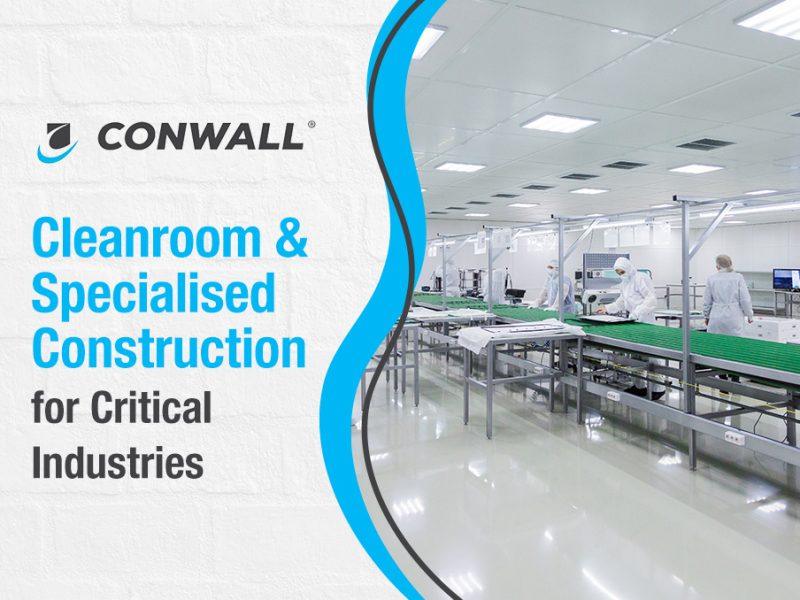
In industries where contamination control, precision, and regulatory compliance are paramount, cleanroom and specialised construction play a vital role. These controlled environments are meticulously designed and built to meet strict standards that ensure the highest levels of cleanliness, safety, and operational efficiency. This article explores the critical aspects of cleanroom and specialised construction, including design considerations, construction protocols, compliance, and emerging trends that define this specialised field.
Understanding Cleanroom Construction
A cleanroom is a tightly controlled, confined space designed to limit airborne particles, contamination, and environmental variables such as temperature and humidity. Cleanrooms are indispensable in sectors including pharmaceuticals, biotechnology, semiconductor manufacturing, aerospace, and healthcare, where product integrity and safety are non-negotiable.
Construction of cleanrooms involves specialised materials and engineering systems such as seamless, chemical-resistant flooring, HEPA (High-Efficiency Particulate Air) filtration, airtight walls, and controlled airflow systems. The entire process requires a systematic approach, starting from concept development to design engineering, implementation, and validation.
Key Components in Cleanroom Construction
- Walls and Ceiling Systems: Use of materials that resist contamination and facilitate easy cleaning.
- Flooring: Seamless, impervious, chemical-resistant surfaces.
- HVAC and Filtration: Air handling units equipped with HEPA or ULPA (Ultra-Low Penetration Air) filters, maintaining air cleanliness standards.
- Control Systems: Integrated building automation systems monitor environmental variables such as pressure differentials, temperature, and humidity.
- Utilities: Specialised systems for purified water, compressed air, and gases essential for manufacturing processes.
Design and Engineering Excellence
The design phase is critical in a cleanroom construction company and involves comprehensive engineering of architectural, mechanical, electrical, plumbing, and automation systems.
Design Phase | Description | Purpose |
Concept Development | Defining requirements based on processes, equipment, and personnel flows. | Ensures operational efficiency and regulatory compliance. |
Architectural Design | Detailed layouts of walls, ceilings, doors, and fit-outs. | Creates physical barriers to contamination and supports workflows. |
Mechanical Design | HVAC and filtration system schematics, air distribution modelling. | Achieves precise control of air cleanliness and environmental parameters. |
Electrical Design | Power distribution for equipment and monitoring systems. | Ensures an uninterrupted and safe energy supply. |
Control Systems | Automation for real-time monitoring and adjustment. | Maintains cleanroom integrity through continuous environmental management. |
Computational fluid dynamics (CFD) modelling is often used to optimise airflow and identify potential contamination hotspots before construction begins, reducing costly post-build modifications.
Construction Protocols and Best Practices
Cleanroom construction is distinct due to the necessity to build in a contamination-controlled manner, often referred to as “building clean.” Strict protocols are applied to minimise particulate generation during construction:
- Cleanroom gowning procedures for workers
- Controlled entry and exit to construction zones
- Use of non-particulating materials and tools
- Airlocks and temporary filtration setups during construction phases
Proper construction management is essential to maintain schedules, control costs, and mitigate risks associated with contamination breaches. The active involvement of end users during construction helps ensure that the facility meets both process and compliance expectations effectively.
Regulatory Standards and Validation
Cleanrooms must comply with international and regional standards such as ISO 14644 (air cleanliness levels), cGMP (current Good Manufacturing Practice) in pharmaceuticals, and FDA regulations. Validation protocols test for:
- Particle counts per cubic meter (validating cleanliness class)
- Air change rates per hour
- Pressure differentials between the cleanroom and adjoining areas
- Temperature and humidity controls
Regular requalification and monitoring ensure ongoing compliance, with advanced sensors providing continuous data to facility managers for proactive maintenance.

Emerging Trends and Technologies
The rise of modular cleanroom construction—using prefabricated POD systems—has increased speed and flexibility, reducing total project timelines by up to 30%. Integration of IoT sensors and AI-driven analytics allows for more precise environmental control and predictive maintenance.
Sustainability is also gaining focus, with energy-efficient HVAC systems and environmentally friendly construction materials being incorporated to reduce carbon footprints without compromising cleanliness.
Cleanroom Classification Table
ISO Classification | Particle Size Limit (≥0.5 μm particles per m³) | Typical Applications |
ISO 1 | 10 | Semiconductor fabs, microelectronics |
ISO 5 | 3,520 | Pharmaceutical sterile manufacturing |
ISO 7 | 352,000 | Medical device assembly |
ISO 8 | 3,520,000 | Non-sterile manufacturing, packaging |
结论
Cleanroom and specialised construction is a highly intricate and essential field that supports critical industries demanding controlled environments. The complexity of design, stringent construction protocols, and rigorous validation ensure that cleanrooms meet exacting standards for contamination control, safety, and operational efficiency. Innovations such as modular construction and smart environmental monitoring continue to elevate industry capabilities.
For anyone seeking expert partner services in cleanroom solutions, 康沃建筑工业股份 offers comprehensive and cutting-edge solutions. Our team ensures each project not only meets but exceeds regulatory and operational expectations. To explore how our expertise can support your next cleanroom or specialised construction initiative, contact us to start a conversation towards your high-performance controlled environment!
