Conwall Construction Industries Sdn. Bhd.

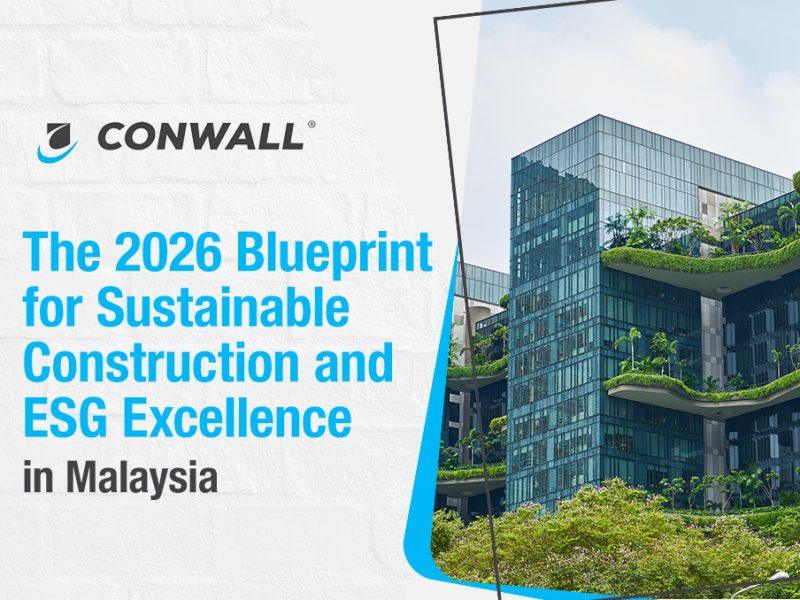
The 2026 Blueprint for Sustainable Construction and ESG Excellence in Malaysia

2026 Blueprint for Sustainable Construction and ESG Excellence in Malaysia

In the rapidly evolving landscape of 2026, the global construction industry is no longer just about raising structures; it is about lowering footprints. The “take-make-waste” era is fading, replaced by a sophisticated, tech-driven approach to sustainability. For a professional ESG construction company in Malaysia, this shift represents the biggest opportunity for innovation since the industrial revolution.

In Malaysia, the push toward Greentech Malaysia initiatives has moved from the fringes of “corporate social responsibility” to the heart of project profitability. Developers are realising that green buildings aren’t just ethical—they are economically resilient.

1. The New Blueprint: Innovations in Sustainable Materials

We’ve reached a tipping point where traditional concrete and steel are being challenged by materials that actually “breathe” with the environment. As an ESG construction company, the focus is now on embodied carbon—the emissions generated even before a building’s lights are switched on.

The Rise of the “Wooden Skyscraper” (CLT)

Cross-Laminated Timber (CLT) has become the star of sustainable high-rises. By layering boards at 90-degree angles, we create panels with the structural strength of steel but at a fraction of the weight.

  • Carbon Sequestration: Every cubic meter of CLT can sequester roughly one tonne of CO2
  • Efficiency: Precision-cut in factories, CLT allows for faster assembly, reducing on-site waste by up to 90%.

Beyond Ordinary Concrete

Concrete remains the world’s most used man-made material, but its carbon tax is high. Innovative “low-carbon concrete” utilises supplementary cementitious materials (SCMs) like fly ash or ground granulated blast-furnace slag (GGBS) to replace traditional Portland cement. In 2026, we are even seeing bio-cement—concrete “grown” using bacteria—that can heal its own cracks, extending the building’s lifespan indefinitely.

Insight: At Conwall, we understand that materials are the DNA of a project. By integrating these high-performance, low-impact solutions, we ensure that every structure serves as a long-term asset for both the client and the planet. Explore our sustainable initiatives at Conwall.

Comparing Material Impacts (Per 1,000m2 of Structural Frame)

MaterialCarbon Footprint (Approx. CO2​)Construction SpeedWaste Generation
Traditional Concrete450 – 550StandardHigh (10-15%)
Low-Carbon Concrete220 – 300StandardMedium (5-8%)
Cross-Laminated Timber-150 (Negative)30% FasterLow (<2%)
Recycled Steel180 – 250FastLow (1-3%)

2. Circular Economy: Building the Future from the Past

The linear model of construction—where we demolish a building and send it to a landfill—is becoming a legal and financial liability. The circular economy principles in construction focus on three pillars: Design for Disassembly (DfD), Material Passports, and Urban Mining.

Urban Mining and Waste Transformation

Instead of viewing an old building as “rubble,” a leading ESG construction company in Malaysia sees it as a quarry. Recycled aggregates from demolished sites are now being processed into high-grade structural components. Even “waste” plastics are being transformed into durable bricks and insulation panels, diverting kilotonnes of debris from Malaysian landfills.

Design for Disassembly (DfD)

What if we designed buildings like LEGO sets? DfD involves using mechanical fasteners instead of permanent adhesives. This allows components to be unbolted and reused in new projects 50 years from now. This “cradle-to-cradle” approach ensures that the value of the material is never lost.

The integration of Greentech Malaysia standards often requires a meticulous lifecycle assessment. According to the GCCA Net Zero Progress Report 2025/26, the industry has already achieved a 25% reduction in $CO_2$ intensity since the 1990s, but the next 10 years will require a 100% shift toward circularity. Reference: GCCA 2025/26 Report.

Conwall CTA banner

3. The Malaysian Context: ESG and Green Growth

In 2026, Malaysia is emerging as a regional hub for green infrastructure. The Thirteenth Malaysia Plan (2026-2030) has officially positioned “Green Growth” as a core pillar of the national economy. For any ESG construction company, this means compliance is no longer enough—leadership is required.

The introduction of the Carbon Tax in 2026 has fundamentally changed the math of construction. High-emission projects now face significant financial penalties, while projects utilising Greentech Malaysia-certified products receive preferential financing and tax incentives.

Why Digital Twins Matter for ESG

Artificial Intelligence and Digital Twins are now essential tools. By creating a digital replica of a building, engineers can simulate energy performance and material stress before a single brick is laid. This prevents the “over-engineering” that leads to material waste.

  • Predictive Maintenance: Sensors detect leaks or structural shifts, preventing costly repairs.
  • Operational Efficiency: Real-time data reduces HVAC energy consumption by up to 40%.

Insight: Navigating the complexities of modern ESG requirements requires a partner who understands the local Malaysian landscape. We bridge the gap between international sustainability standards and local project realities. Contact us for more info!

The Economics of Sustainability

Many developers still ask: “Does green construction cost more?” In 2026, the data says no. While initial material costs for things like CLT might be 5-10% higher, the “Total Cost of Ownership” (TCO) is significantly lower.

  • Reduced Labour: Prefabricated green materials require fewer workers and less time on-site.
  • Energy Savings: Advanced insulation and smart glass reduce electricity bills for the life of the building.
  • Asset Value: ESG-compliant buildings command higher rental premiums and have higher resale values in a climate-conscious market.
Feature Conventional Building ESG-Optimised Building
Operational Energy High Carbon Intensity Net Zero / Low Carbon
Material Origin Virgin Raw Materials Recycled / Bio-based
End-of-Life 80% Landfill 90% Recyclable/Reusable
Financing Standard Rates Green Loans / Lower Interest

Conclusion: Building with Purpose

Sustainability in 2026 is no longer a “nice-to-have” feature—it is the foundation of structural integrity and financial viability. From the adoption of Cross-Laminated Timber to the implementation of circular waste management, the construction sector is undergoing a profound metamorphosis.

For developers and investors in Malaysia, the choice of a partner is critical. An ESG construction company that integrates Greentech Malaysia innovations is not just building a wall; they are building a legacy that will withstand the environmental and economic shifts of the coming decades.

As we look toward a net-zero future, the expertise of pioneers like Conwall becomes indispensable. We specialise in turning sustainability goals into tangible, high-value architectural realities. Whether you are looking to decarbonise your next project or implement circular economy principles, we have the technical depth to lead the way.

Ready to transform your vision into a sustainable landmark? Let’s build the future together.

Connect with our ESG Strategists at Conwall today!

en_USEnglish